




A British lawn spends winter under a lid of wet leaves, mud and neglect. Then March arrives, the soil warms, and everything starts growing at once — grass, moss, daisies, the lot. Spring is the short window where a few well-timed jobs set the lawn up for the whole year. Do them in the right order and you avoid the usual mistakes: scarifying too early on a cold lawn, feeding too hard, or scalping the grass on the first cut of the year.
Read the ground before you touch it
Forget the calendar for a moment and look at the lawn. Growth has restarted when you can see fresh green shoots at the base of the tufts and the grass springs back when you walk on it. If the ground is still waterlogged or frozen, stay off it. Footprints pressed into a soggy lawn compact the soil underneath, and those bare, compacted patches can linger into summer.
Work from the top down as well. Clear twigs, leaves and last year's debris first, because a light tidy tells you what you're actually dealing with: thin grass, creeping moss, or a lawn that has simply been smothered over winter.
March: the first cut and a clear-up
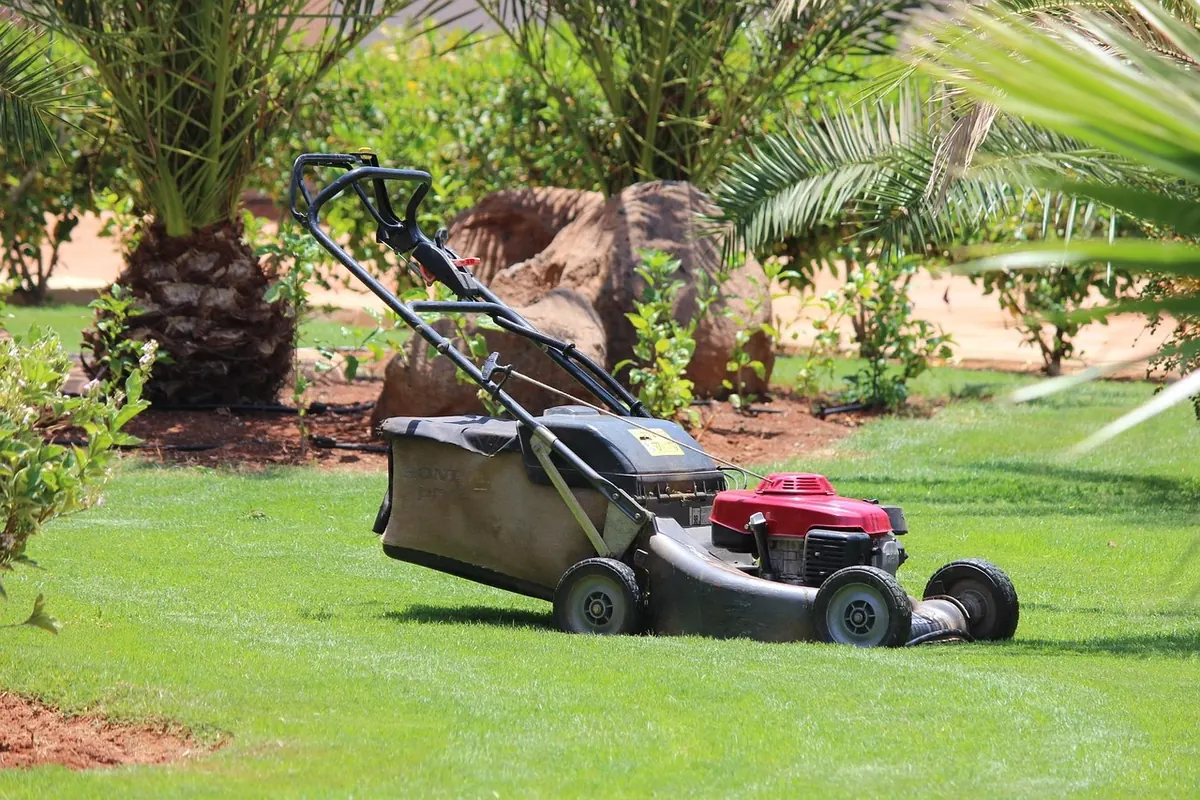
The first cut is about topping, not tidying up the height. Set the mower on its highest setting — or one notch below — and take off just the tips on a dry day when the grass itself is dry. Collect the clippings. Cutting wet grass clogs the mower and leaves clumps that smother the grass beneath. If frost is forecast, wait.
While you're out there, give the lawn a gentle rake with a spring-tine rake to lift matted grass and let air reach the roots. Then look at the mower. A blunt blade tears grass rather than slicing it, leaving frayed tips that brown off and give disease an easy way in. Sharpen the blade, and give the machine a basic service if it hasn't had one.
April: scarify, aerate, feed
Scarify — but only when growth is strong
Scarifying removes the dead thatch and moss lying between the grass and the soil. Do it too early and a cold lawn struggles to recover. Wait until the grass is growing well, usually mid to late spring, and tackle moss first: if there's a lot of it, treat it and let it blacken before you rake it out. Then work in two directions with a spring-tine rake, or hire a scarifier for a large lawn. One pass at a time — you want to thin the thatch, not strip the lawn.
Aerate compacted areas
If the lawn sees a lot of foot traffic, or water sits on the surface after rain, spike or hollow-tine it. Hollow tining pulls small cores out of the soil and is worth the effort on heavy clay; a garden fork pushed in and rocked back and forth does a decent job on smaller lawns. Do it when the soil is moist but not sodden, and brush a little sandy top dressing into the holes afterwards if you have it.
Feed for steady growth
A spring feed is nitrogen-led to push the grass into growth. Apply it evenly with a spreader rather than by hand, on a day when rain is expected or you can water it in. Don't feed a drought-stressed lawn, and don't overdo it — soft, sappy growth is more prone to disease and wilts faster in a dry spell. If in doubt, apply slightly under the recommended rate.
Overseeding thin and bare patches
Early autumn is the traditional time to sow grass seed, but spring works well too if you can keep the seed damp. Match the mix to the lawn: a hardwearing ryegrass blend for a family lawn that takes a battering, finer fescue and bent for an ornamental lawn you mostly look at.
Scratch the bare patch with a rake to loosen the surface, sow thinly, rake the seed in lightly and firm it with the back of the rake or a board. Keep it moist for the next few weeks — light, regular watering rather than a soaking. Stay off it, and don't mow until the new grass is tall enough to need it, then cut high with a sharp blade.
Leave weedkiller alone until new seed has been mown several times. Killing the weeds and the young grass together is a hard lesson to learn.
May: get the mowing height right
From May onwards, little and often beats an occasional drastic cut. As a rule, never take more than a third of the leaf off in one go, and raise the height during dry spells so the roots are shaded and the lawn holds its colour.
- Fine ornamental lawns: 15–25mm.
- General family lawns: 25–40mm.
- Shady or drought-prone lawns: 40–50mm.
- Rough grass and meadow edges: cut once or twice a season, and let it flower in between.
Change direction each time you mow to avoid wearing ruts, and alternate the stripes if you like the look. Keep the blade sharp and the clipping box emptied — a full box leaves clumps behind.
Watering, edges and the small jobs
A normal British spring supplies enough rain, so watering is rarely needed on an established lawn. If you do water, do it thoroughly and less often rather than little and often; a light sprinkle encourages shallow roots. Early morning is the best time. Newly sown patches are the exception and need consistent moisture.
Then tidy the details: crisp edges along borders with a half-moon edger, and a trim around trees and fence posts where the mower can't reach. Hand-fork dandelions and plantain out while the soil is soft. If red thread appears in mild, damp weather, a feed and a dry spell usually sorts it out — it looks worse than it is.
A simple spring order of work
- March: clear debris, first high cut, service the mower.
- Early April: deal with moss, then scarify once growth is strong.
- Mid April: aerate compacted areas and apply a spring feed.
- Late April: overseed bare patches and keep them damp.
- May onwards: mow little and often at the right height, varying direction each time.
Spread the work over a few weekends rather than trying to fix everything in one go. Each job needs the grass to recover before the next, and you'll learn more about your lawn — where it drains poorly, where it thins in shade — by looking at it week by week. If the lawn is more moss than grass, or you're weighing up a full renovation, it's worth asking a local lawn care specialist to look before you spend a season fighting it.
Photo: kikatani / Pixabay